From navigating the bustling alleys of Kathmandu's Thamel district to checking weather updates on the Annapurna Circuit, a reliable mobile connection is your most important travel tool. A Nepal eSIM delivers instant, affordable data the moment you land at Tribhuvan International Airport, eliminating the hunt for a SIM card shop and protecting you from shocking roaming bills.
Whether you're a trekker heading to Everest Base Camp, a spiritual seeker exploring the temples of Lumbini, or a digital nomad setting up in lakeside Pokhara, this guide will help you choose the perfect data plan for your Himalayan adventure.
Finding your guesthouse in Patan or booking a last-minute flight from Pokhara requires a steady internet connection. With a digital eSIM, you bypass the queues at Ncell stores and activate a local data plan before your plane even touches down.
Travelers across the Roof of the World are switching to eSIMs for these compelling advantages:
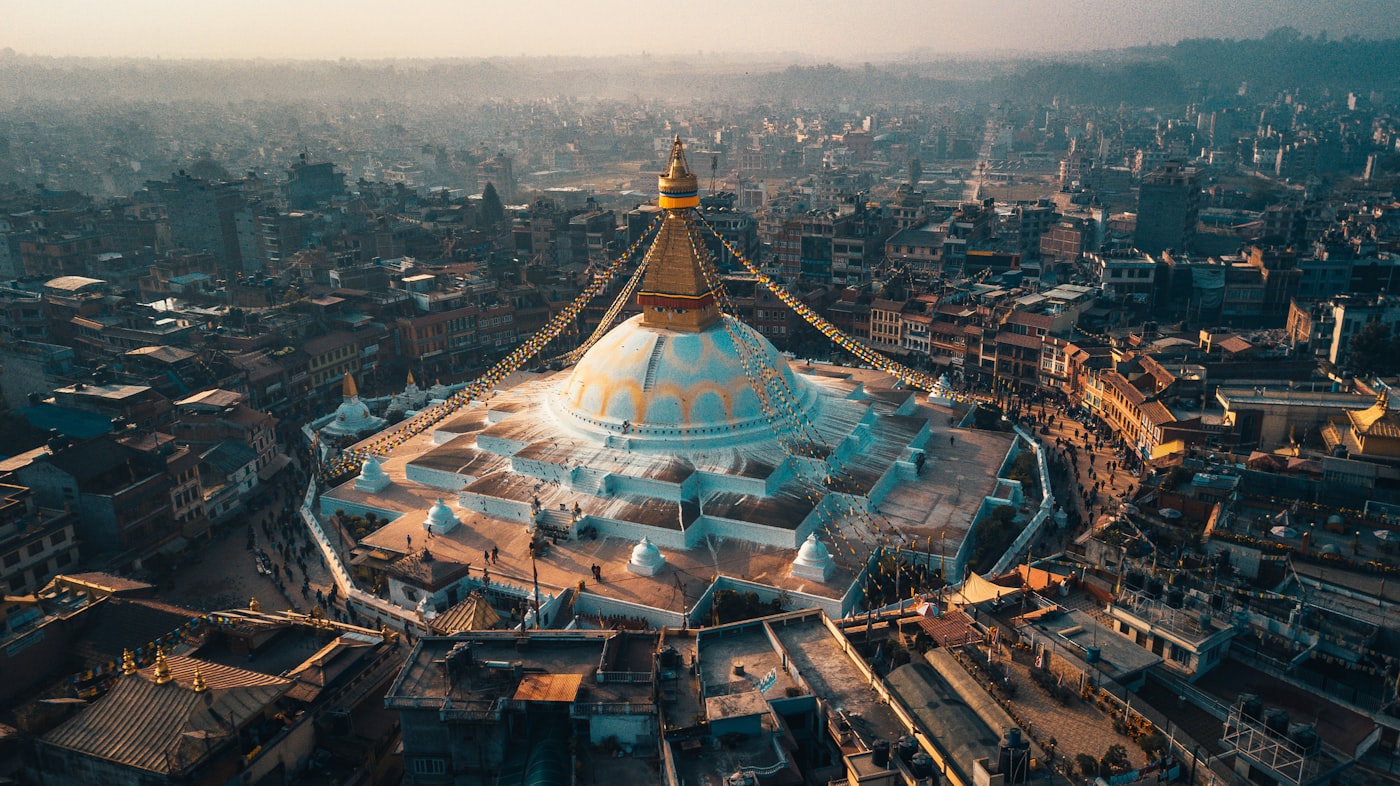
Roaming charges while traveling through Nepal can be astronomical. A prepaid eSIM gives you transparent, local-rate pricing, letting you share photos of the Boudhanath Stupa or video call from Nagarkot's sunrise viewpoint without financial anxiety.
You pay one clear price upfront, giving you complete control over your communication budget while trekking in the world's highest mountains.
Check real-time trail conditions on the Everest Three Passes trek or find the best momo stall in Pokhara. Digital nomads can reliably work from cafes in Kathmandu's bustling Durbar Marg. Your eSIM provides the essential link for navigation, translation, and sharing your journey.
Mobile infrastructure in Nepal is robust in tourist hubs and along major trekking routes, connecting you to the peaks and valleys.
Leading eSIM providers partner with Nepal Telecom and Ncell to ensure strong coverage in key areas:
While coverage is extensive, signal can become intermittent in very remote high-altitude passes. Always download offline maps for your trekking region beforehand.
You'll experience fast 4G speeds in cities and towns, perfect for video calls home or uploading Himalayan panoramas. 5G is in early stages in Kathmandu, but widespread 4G is more than adequate for all travel tasks.
In rural mountain areas, networks may step down to 3G, which still supports messaging, email, and basic web browsing.
Need to get work done from a lodge in Ghorepani? Most Nepal eSIM plans allow tethering, letting you connect your laptop or tablet to your phone's data. This creates a secure personal hotspot anywhere you have a signal.
Monitor your data usage when tethering, as downloading large files or streaming will consume your allowance faster.
Match your data package to your itinerary and online habits for a seamless experience.
For a weekend in Kathmandu or a brief business meeting, a 1-2GB plan is typically sufficient. This covers:
Traveling from Kathmandu to Pokhara and doing some light trekking? A 3GB to 5GB plan is ideal. This allows for daily navigation, regular social media updates, and using translation apps in local markets.
If you plan on using music streaming during long bus rides, opt for a 5GB plan.
For month-long explorations, remote work, or serious content creation, consider a 10GB+ plan. This supports video conferencing, frequent map usage, and backing up your high-resolution mountain photography.
Many providers offer easy top-ups, so you can add more data if your journey through the Mustang region gets extended.
The entire process is digital, simple, and can be done from anywhere.
Most modern smartphones support eSIM technology. Key compatible models include:
Your phone must be unlocked from your home carrier to install a third-party eSIM.
For iPhone (iOS):
For Android (Samsung/Pixel):
Stretch your data allowance and stay connected efficiently with these local insights.
Your data powers vital travel tools. Use Maps.me as a reliable offline map alternative. Have Google Translate ready for menus in smaller towns. The Himalayan Weather app is crucial for trekking plans. WhatsApp is the primary communication method for arranging guides, teahouses, and transport across Nepal.
Your eSIM provides a more secure, private connection than public Wi-Fi at Kathmandu's airport or cafes. For accessing online banking or sensitive work emails, always use your mobile data over an open network. Consider using a VPN for an added layer of security.
From the Annapurna Sanctuary to the remote trails of Upper Dolpo, an eSIM keeps you connected for safety, navigation, and sharing your epic journey, even if just at lower village stops.
Exploring the ancient courtyards of Bhaktapur, meditating in Kopan Monastery, or visiting Buddha's birthplace in Lumbini is enhanced with instant access to translation and historical information.
Kathmandu's growing co-working scene and Pokhara's digital nomad community require reliable internet. An eSIM provides a professional-grade connection for meetings and productivity.
How do I activate my eSIM for Nepal?
Purchase your plan online, and you'll receive a QR code via email. Scan this code in your phone's cellular settings to activate instantly.
Will my WhatsApp number work with an eSIM?
Absolutely. WhatsApp uses your phone number for registration but operates over data. It will work seamlessly on your new Nepal eSIM connection.
Can I use my eSIM as a mobile hotspot?
Yes, most plans allow personal hotspot/tethering, letting you share your data connection with a laptop or other devices.
Is the eSIM for calls or data-only?
Most travel eSIMs for Nepal are data-only. You can make calls and send texts using internet-based apps like WhatsApp, Skype, or Viber.
What if I use all my data before my trip ends?
You can usually purchase a data top-up online from the same provider, as long as you still have some connectivity to do so.
Can I use my Nepal eSIM in India or Tibet?
Typically, plans are country-specific. For cross-border travel, look for a regional 'South Asia' or 'Asia Pacific' eSIM plan that includes Nepal.
How long is the eSIM valid for?
Validity periods vary, commonly from 7 to 30 days, starting from the first time you connect to a network in Nepal.
How do I know if my phone supports eSIM?
Check your cellular settings for an 'Add Cellular Plan' or 'Add eSIM' option. Most phones released in the last 4-5 years are compatible.
Do I need to take out my physical SIM card?
No, you can use both simultaneously. Simply set your Nepal eSIM as the default for mobile data in your settings.
Which local network will my eSIM use?
Quality providers partner with the strongest local carriers, primarily Nepal Telecom (NTC) and Ncell, to ensure the best possible coverage across the country.
For anyone traveling to the Himalayas, a Nepal eSIM is a non-negotiable modern convenience. It represents the simplest, most cost-effective way to guarantee a reliable internet connection from the chaotic charm of Kathmandu to the serene heights of the mountain trails.
It provides the freedom to wander with confidence, knowing you can navigate, communicate, and capture your journey without hassle or hidden fees.
'Namaste' – may your journey be connected. Share the spirit of the mountains with a data plan that reaches as high as your ambitions.
✈️ 🎯 Ready to explore Nepal connected?